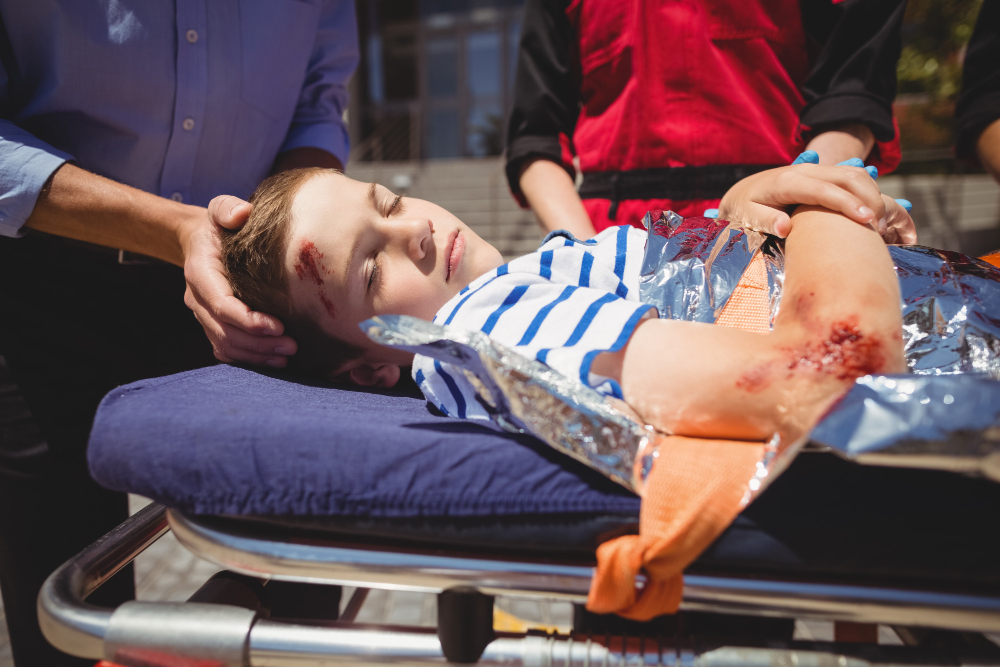
A car accident claim for a child does not work the way an adult’s does. A child cannot sign a release or hire a lawyer, so a parent acts for them. A judge has to approve any settlement, and the money normally stays under court supervision until the child turns 18.
Ace Lakhani Law Firm represents people injured in car accidents in Las Vegas and Phoenix. Here is how a child’s claim works in Nevada and Arizona, starting with the first few days.
Get your child examined the same day
Children do not report symptoms the way adults do. A toddler cannot describe a headache, and a ten-year-old may stay quiet to avoid another appointment. Have a pediatrician or an emergency physician examine your child on the day of the crash if you can.
Over the next few weeks, write down any changes you notice in sleep, appetite, balance, mood, or schoolwork. Report it at the next visit so it enters the medical record. Adults often have delayed symptoms after a crash, and children do too. With a child, the record depends largely on what a parent noticed and reported.
Replace the car seat and keep the old one
The National Highway Traffic Safety Administration recommends replacing a car seat after a moderate or severe crash. A seat may stay in use only after a minor crash. The agency’s definition requires that the vehicle could be driven away, the door nearest the seat was undamaged, no passenger was injured, no airbag deployed, and the seat shows no visible damage. A crash that injured your child does not meet that test.
Store the old seat until the claim is closed, and keep the receipt for the new one. The replacement cost can be claimed with the rest of the property damage.
Who files the claim for a child?
A parent or legal guardian brings the claim on the child’s behalf. In Nevada, NRS 41.200 gives that right to either parent, to the custodial parent when the parents live apart, or to a court-appointed guardian.
The claim usually starts with the at-fault driver’s liability insurer. Your own policy may also apply through medical payments coverage or uninsured motorist coverage. A Las Vegas car accident attorney confirms which policies apply and what their limits are.
What the claim can cover
A child’s own claim can include pain and suffering, scarring, permanent limitations, future medical care, and reduced earning ability as an adult. Medical bills incurred while the child is a minor are usually the parents’ obligation, so parents may hold a separate claim for those costs.
When the at-fault driver was impaired, punitive damages may also apply. Our drunk driving accident lawyers pursue those damages in the same case as the injury claim.
Car seat questions from the insurance company
Adjusters sometimes ask how a child was restrained. Nevada requires a child restraint system for a child who is under 6 and less than 57 inches tall. A child under 2 must ride rear-facing in the back seat, with limited exceptions (NRS 484B.157). The same statute says a violation may not be considered negligence in any civil action. If an insurer in a Nevada claim points to the car seat as a reason to pay less, raise that provision with your attorney before you respond.
A judge must approve the settlement
In Nevada, a settlement of a child’s injury claim is not effective until a district court approves it (NRS 41.200). The parent files a verified petition in the county where the child lives. The petition states how the crash happened, the total settlement amount, and how much will go to attorney’s fees, medical expenses, and other costs. The child’s medical records are submitted at the hearing, with the prognosis and an estimate of future medical expenses.
The petition must also confirm that the parent understands the settlement bars any further claim against the party paying it. A growth plate fracture or a head injury may not show its full effect for years. A serious injury case should not go to a judge before the treating doctors give a long-term opinion. Our catastrophic injury lawyers build that medical picture first.
Arizona requires approval as well. Under Rule 53 of the Arizona Rules of Probate Procedure, any superior court judge may approve a minor’s settlement of $10,000 or less, and a larger settlement must be approved in a probate proceeding.
Where the settlement money goes
In Nevada, the parent or guardian who receives the funds must place them in a blocked financial investment for the child. The statute lists options such as a savings account at a Nevada institution, a certificate of deposit, or an annuity. Proof that the investment exists is due to the court within 30 days, and a balance above $10,000 requires a verified report every year.
Control passes to the child once the court certifies that they have turned 18. Arizona judges choose from several arrangements under Rule 53, including a trust or a structured settlement.
How long you have to file
Most injury lawsuits in Nevada must be filed within two years (NRS 11.190(4)(e)). For a child, NRS 11.250 says the time before age 18 does not count toward that limit. Arizona uses the same two-year period and has a matching rule for minors in A.R.S. 12-502.
That extension covers the child’s own claim. A parent’s separate claim for medical bills may still run from the date of the crash. Claims against a government entity, such as a crash with a school bus or a city vehicle, can carry shorter deadlines.
Frequently asked questions
1) Should my child talk to the other driver’s insurance adjuster?
No one in your family is required to give the other driver’s insurer a recorded statement, and that includes your child. Speak with a lawyer before you agree to an interview or sign a medical records authorization.
2) Can I use the settlement for my child’s expenses before they turn 18?
In Nevada, money in a blocked investment can be released early only by an order from the court that approved the settlement. A parent who needs funds for the child’s care has to ask that court.
3) Does the court charge a fee to review a child’s settlement in Nevada?
No. NRS 41.200 bars the clerk from charging a fee to file the petition or to place it on the court’s calendar. Attorney’s fees are separate and must be disclosed in the petition.
4) I was driving when my child was hurt. Can my child still have a claim?
Possibly. A child passenger is rarely at fault, and a claim may be available against whichever driver caused the crash. Policies treat household members differently, so have a lawyer read yours before you assume either answer.
5) We were visiting Las Vegas when the crash happened. Which court approves the settlement?
For a child who does not live in Nevada, NRS 41.200 sends the petition to the district court in the county where the claim arose. A crash in Las Vegas would go to the district court in Clark County.
Conclusion
A child’s claim has a longer filing window than an adult’s and ends with a judge’s review, so the early steps carry extra weight. See a doctor on the first day, and do not accept a settlement before the long-term outlook is known.
Ace Lakhani Law Firm works on a contingency fee, and you owe no attorney’s fee unless compensation is recovered. Call 702.814.4000 in Las Vegas or 602.444.2222 in Phoenix, or contact our office to talk through what happened.